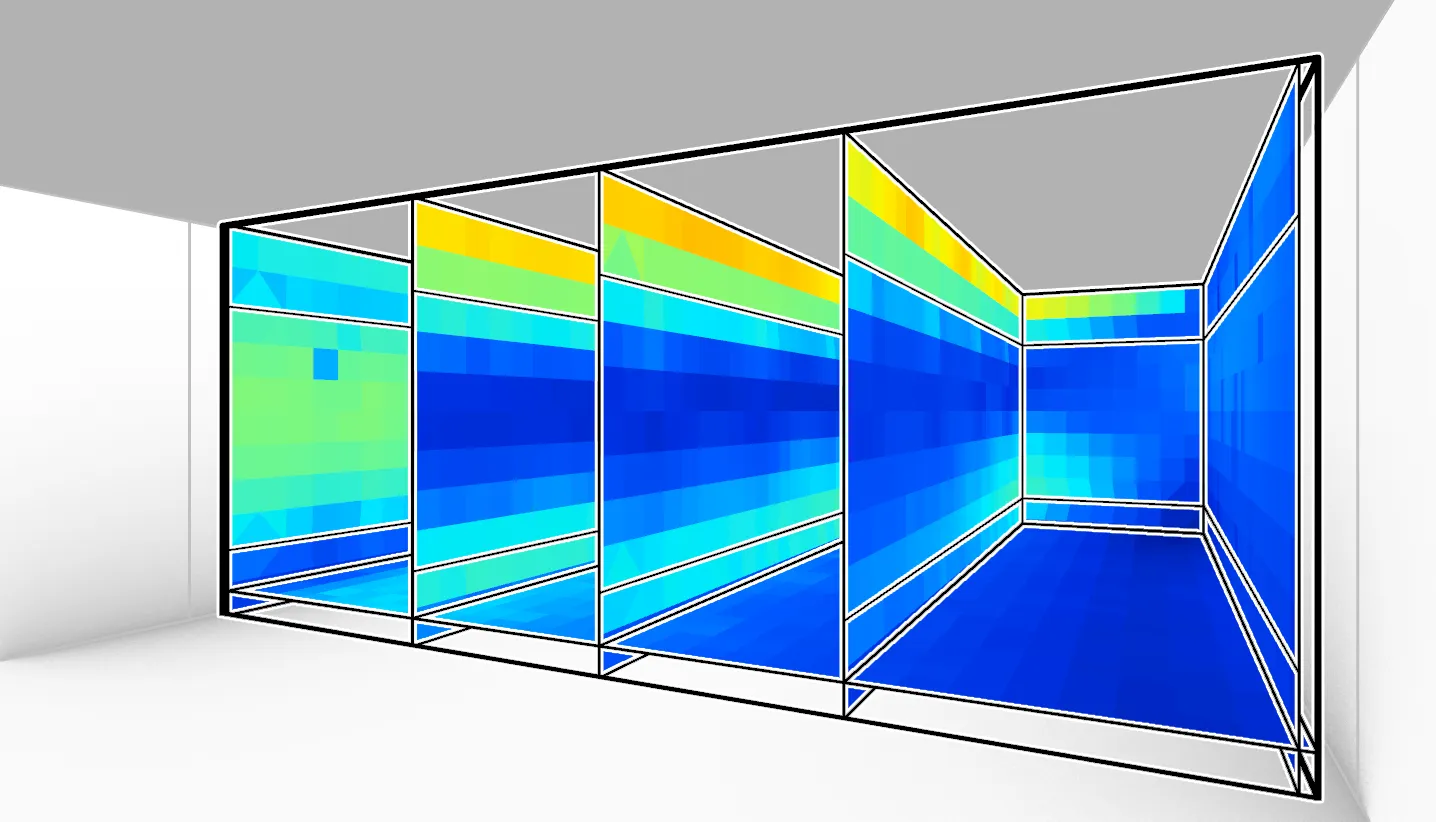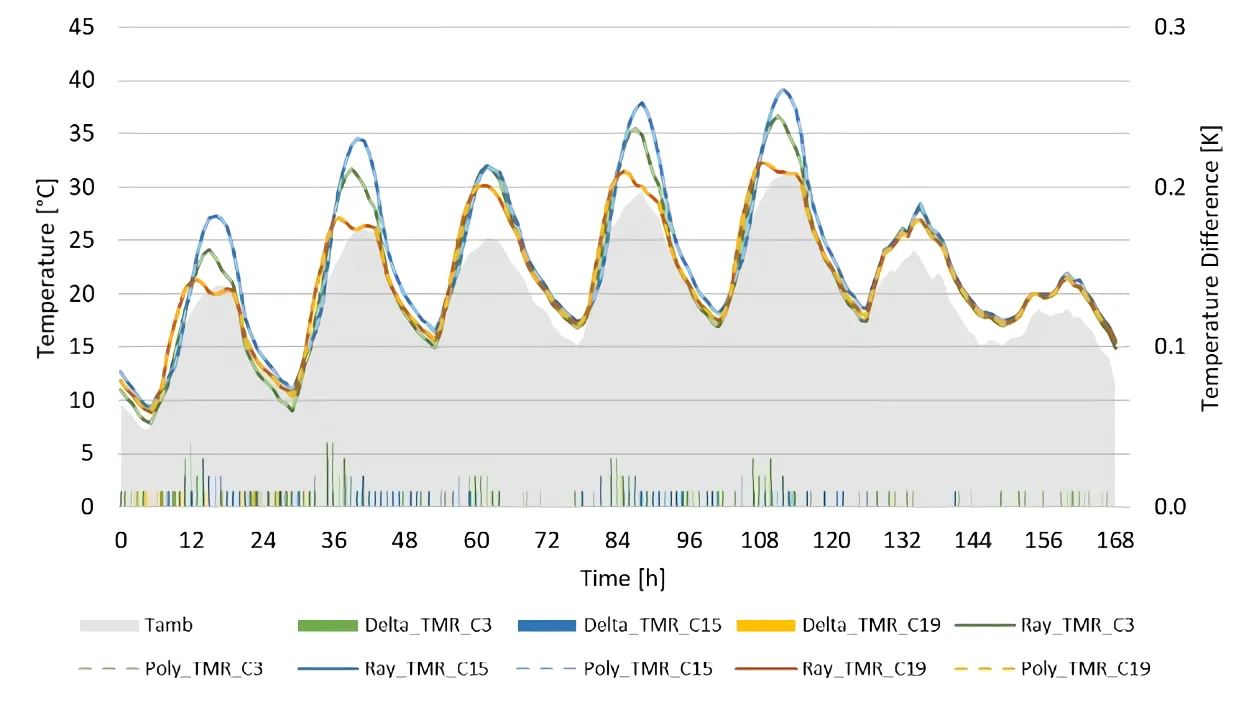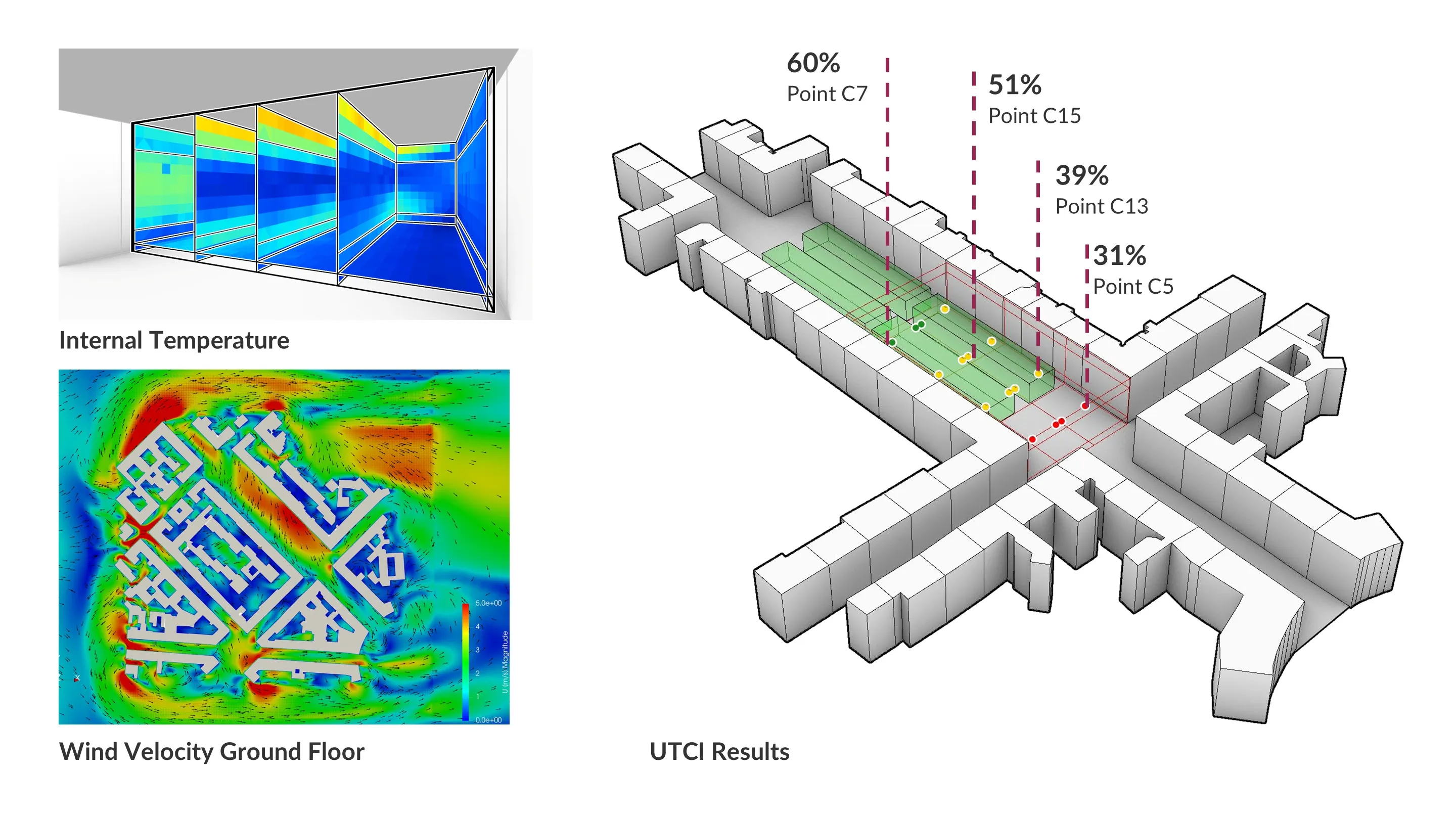
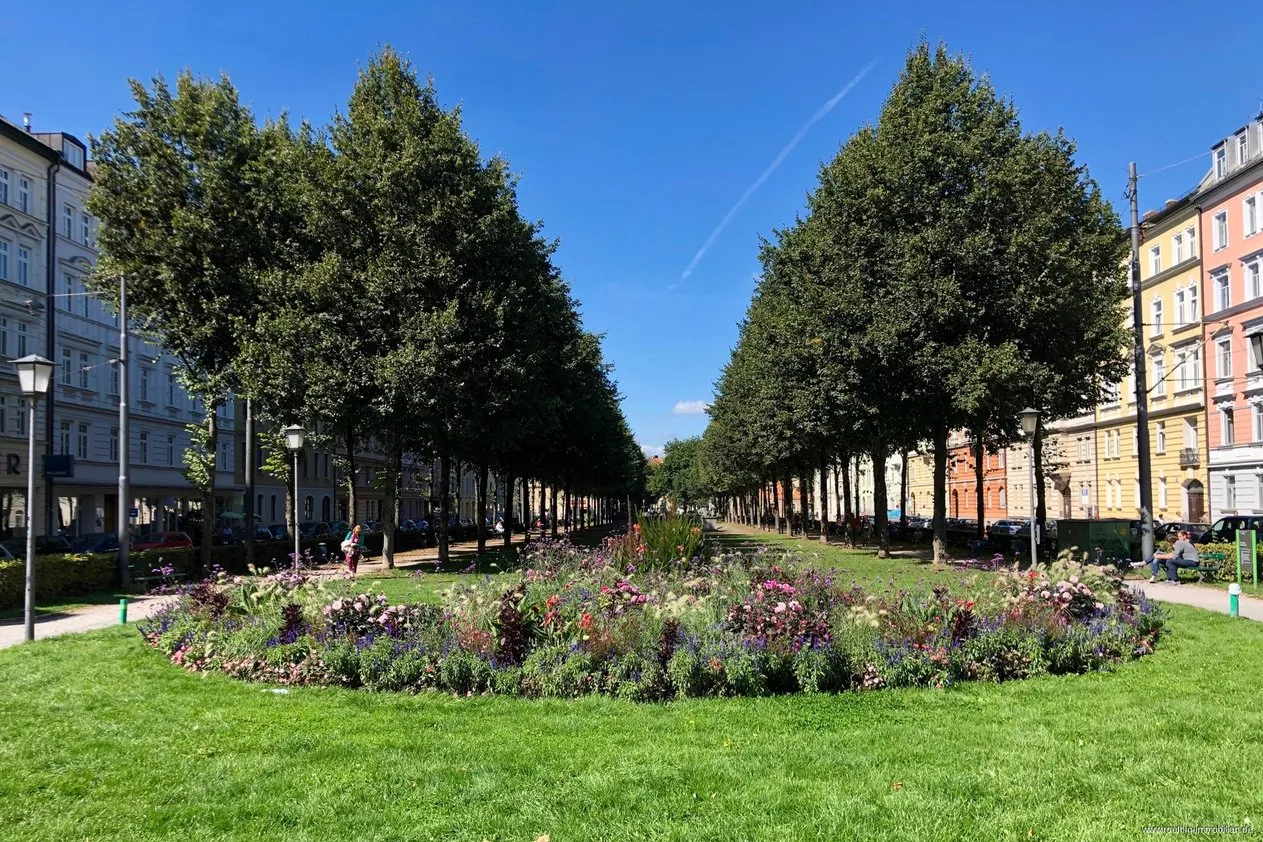
As my research project at Transsolar, I led the testing of the new Transsolar Outdoor Comfort Tool through a case study at Bordeauxplatz, Munich. The study combined multi-directional urban CFD simulations using OpenFOAM with Eddy3D and dynamic outdoor thermal simulations using TRNSYS with TRNlizard, both integrated inside Grasshopper 3D.
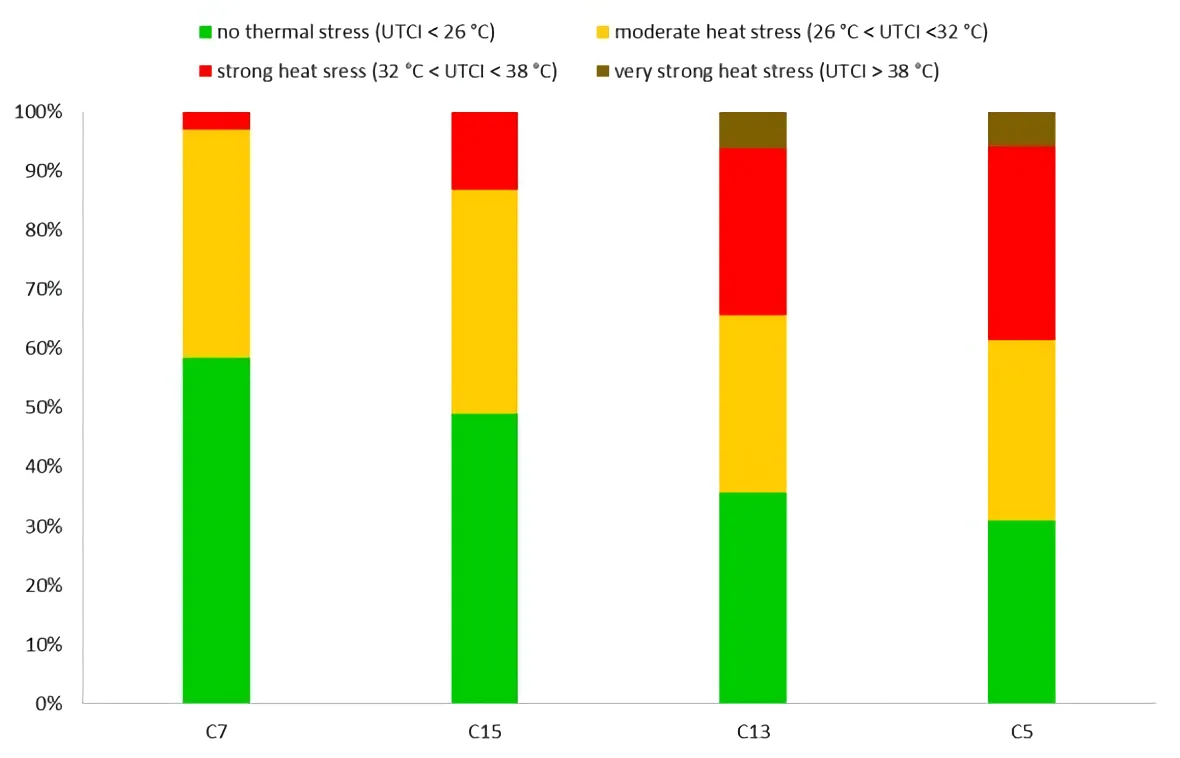
The results show that detailed outdoor comfort calculations using CFD and thermal simulation differ significantly from simplified workflows that ignore local wind velocity and surface radiant temperature. In this case study, ignoring local wind data led to discrepancies of up to 23.5% in time-in-comfort at critical points inside the plaza.
CHALLENGES
- Debugging a newly developed tool, verifying every workflow step.
- Automated geometry generation and clean-up from OpenStreetMap data.
- OpenFOAM working knowledge for urban CFD with multiple wind directions.
- Thermodynamics knowledge for running and analysing the simulation results.
- Validating TS-OC-Tool accuracy by comparing results with EnviMET and Ladybug Tools.
WORKFLOW
- Boundary condition retrieval for CFD and thermal models (surrounding buildings, materiality).
- Geometry preparation from OpenStreetMap data inside Grasshopper 3D.
- Multi-direction CFD simulation using OpenFOAM with Eddy3D, coupled to the thermal model.
- Initial simulation and debugging: multiple issues identified and fixed.
- Parametric simulation using TToolbox and custom Python components.
ACHIEVEMENTS
- Parametric sensitivity analysis of thermal comfort improvements from vegetation in outdoor comfort simulations.
- Simulation results validated against field measurements at Bordeauxplatz, Munich.
- Up to 30% UTCI accuracy improvement when using CFD-coupled detailed thermal modelling vs simplified workflows.
- Bug fixes and default-parameter updates to the TS-OC-Tool.
- Scientific validation via a peer-reviewed publication at the IBPSA building simulation conference.
TOOL DEVELOPMENT
Alongside the case study, I supported my Transsolar mentors Marion Hiller and Christian Frenzel for 15 months to further develop the tool, which couples TRNSYS as the thermal engine with Grasshopper 3D via TRNlizard, a Python-based plugin for parametric control of thermal simulations.
- Integrated trees as thermally coupled zones within the main air-node.
- Integrated wind comfort factors from urban CFD into the thermal simulation.
- Developed and improved GH-Python modules for the TRNlizard plugin.
- Built visualisation tools for CFD and UTCI results using Python with Pandas and Plotly.
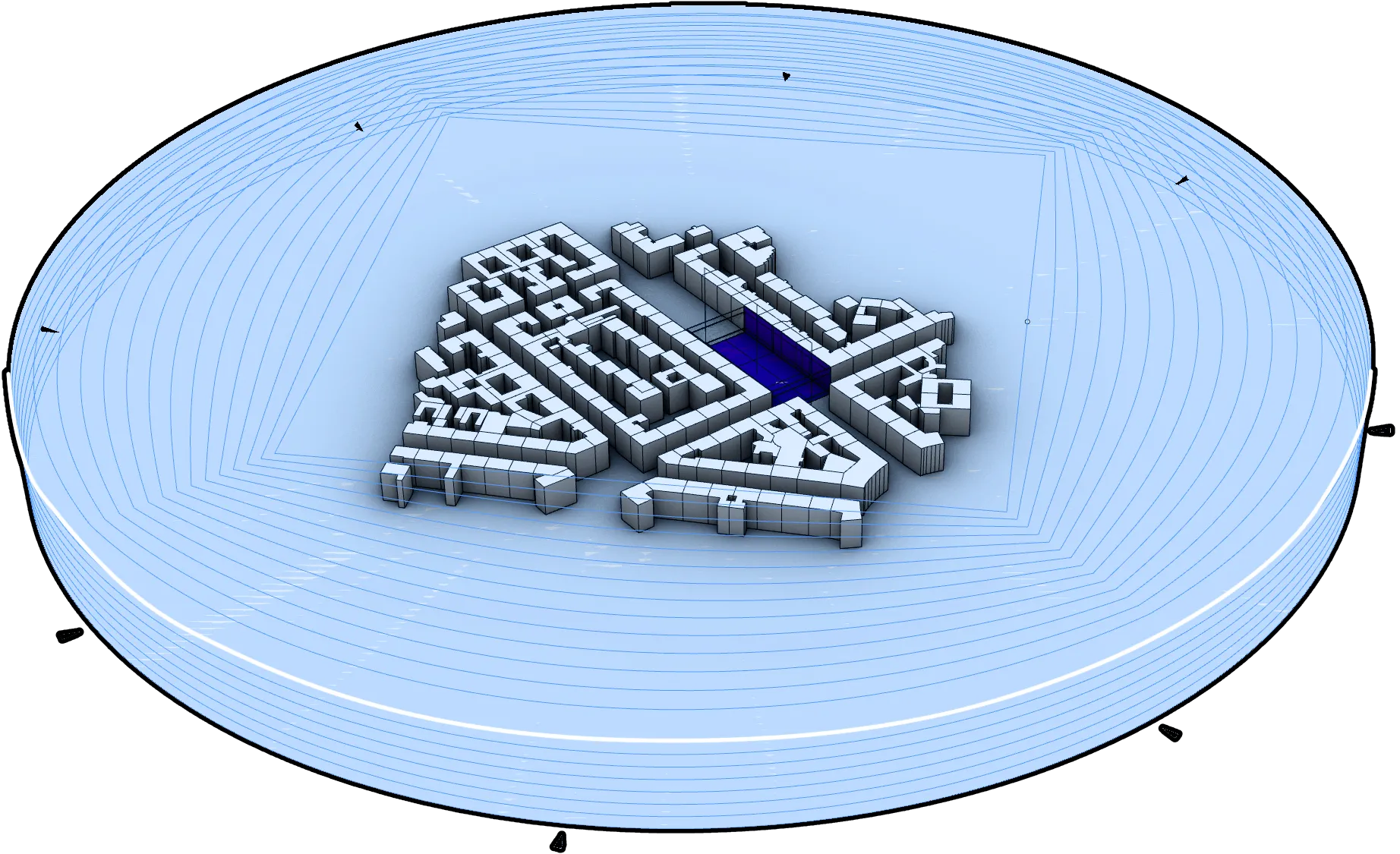
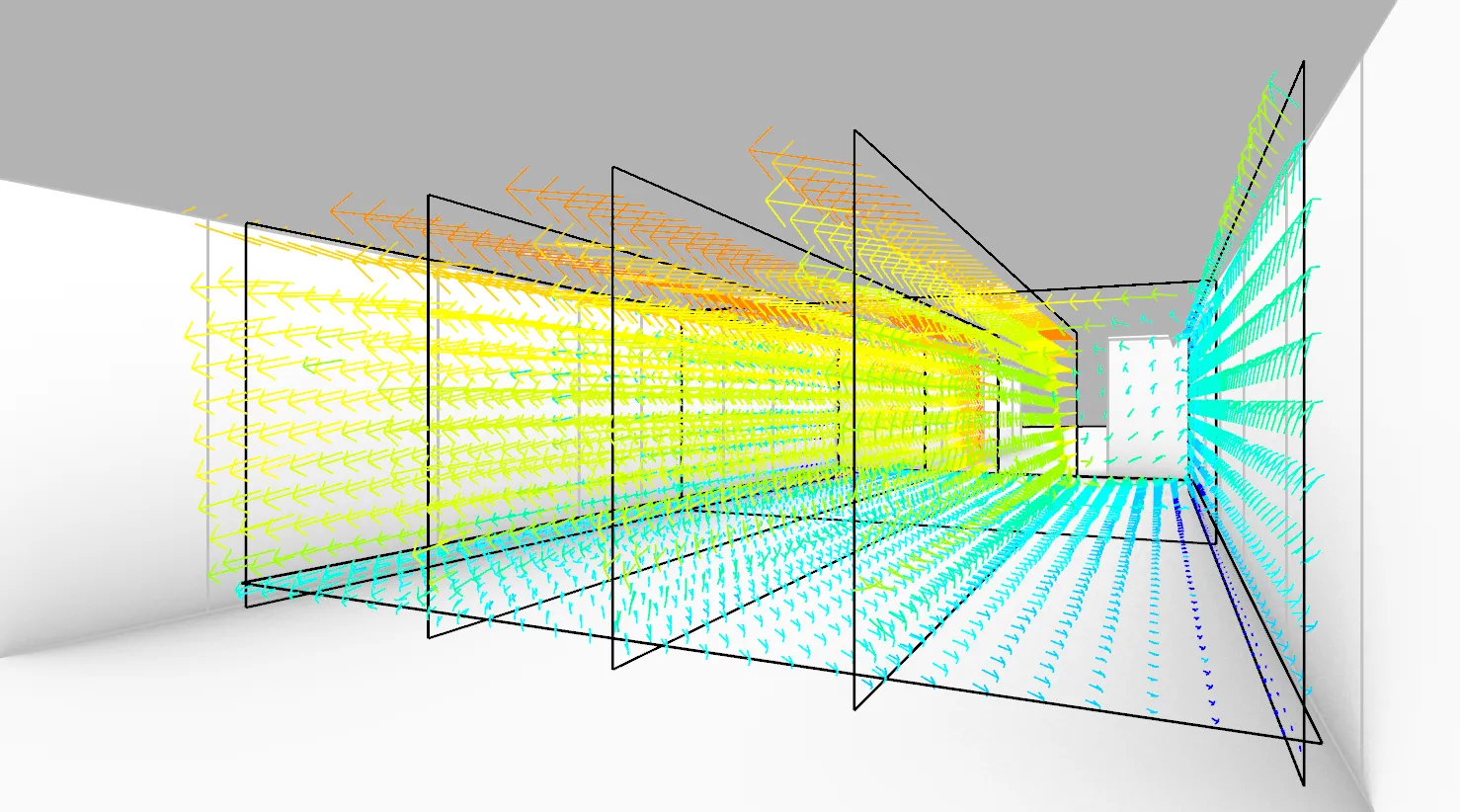
The model consists of a thermal zone (56 m × 110 m × 24 m) with three vertical air-nodes, including external shading elements representing the surrounding building. The middle air-node contains two thermal tree zones representing the existing trees on the side. Local comfort conditions are evaluated for 28 positions.