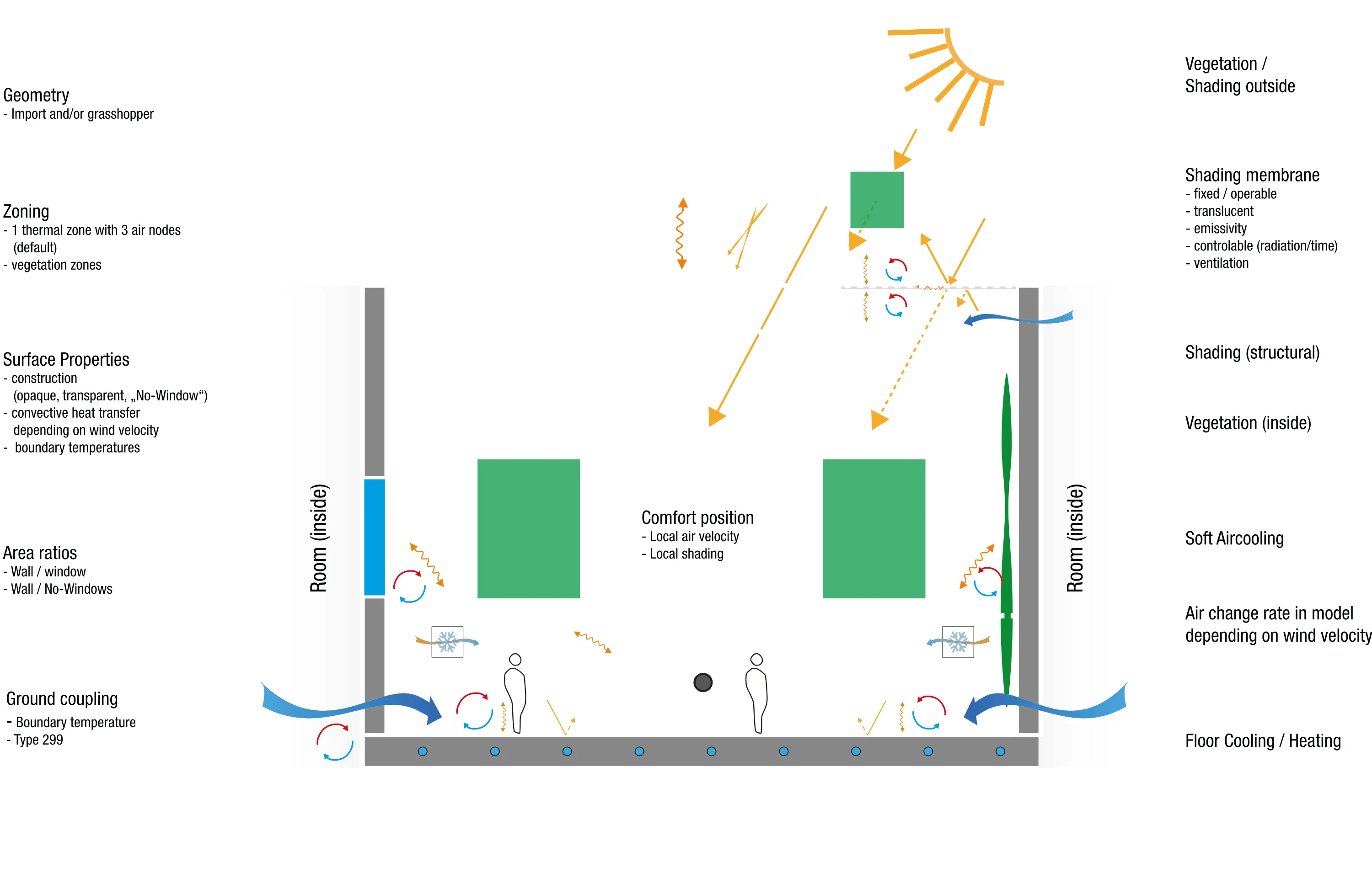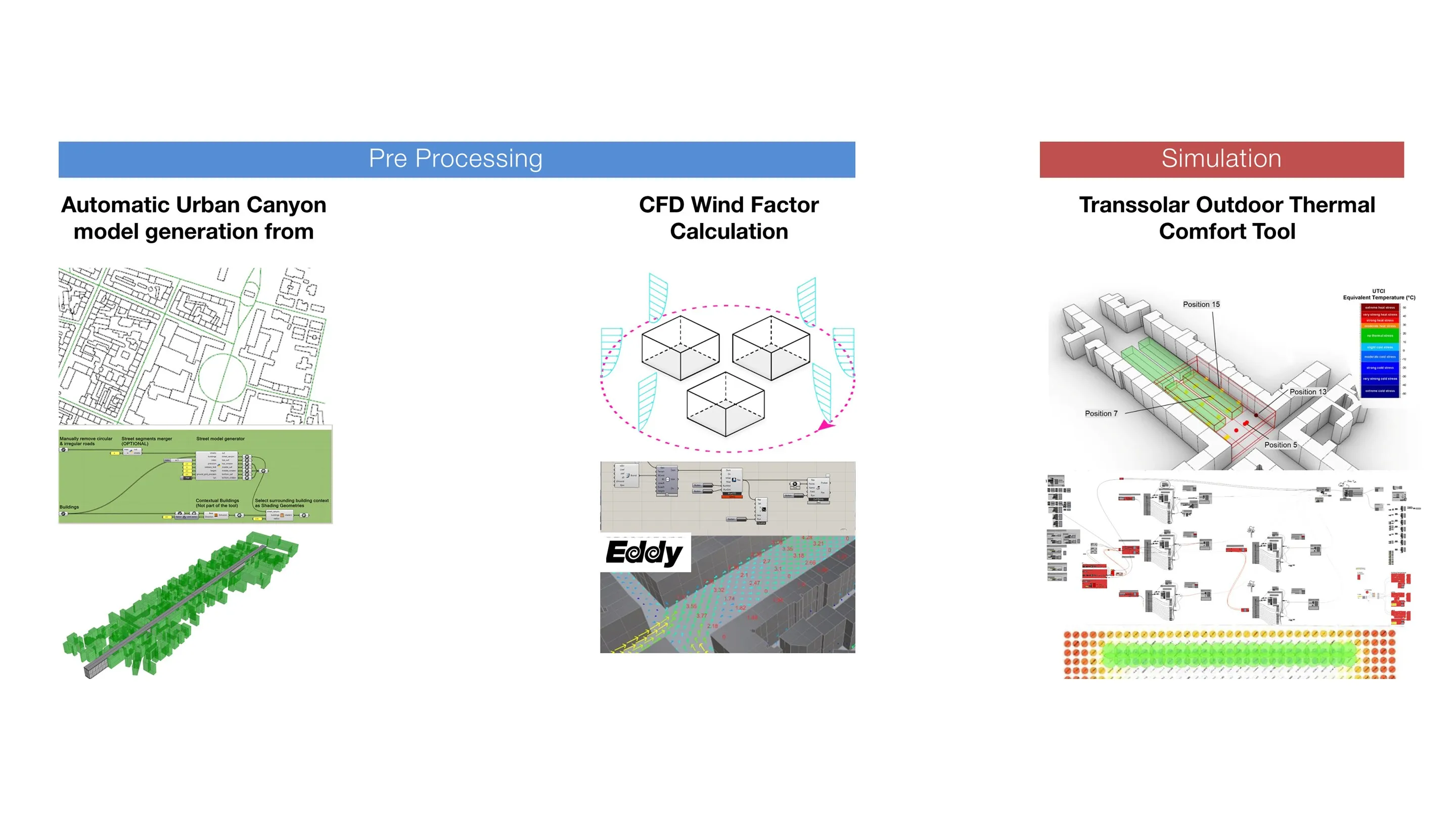
Transsolar is continually developing new thermal simulation tools to improve outdoor comfort under a warming climate. The bottleneck is rarely the physics; it’s usability, interface, and partial feature coverage that limit how broadly the tools get applied.
As part of the Transsolar Academy, I supported Marion Hiller and Christian Frenzel for 15 months to further develop the simulation environment for urban microclimate transient heat flows and outdoor thermal comfort, using new algorithms for climate optimisation in cities.
The goal: improve outdoor simulation tools built on TRNSYS as the thermal engine and Grasshopper 3D as the visual programming platform, coupled via TRNlizard, a Python-based plugin for parametric control of thermal simulations.
CHALLENGES
- Deep working knowledge of thermodynamics, the TRNSYS engine, and its Grasshopper interface.
- Using IronPython (.NET variant) inside Grasshopper, with limited support for external libraries.
- Calculating air change rates for each air-node from the CFD results.
- Integrating trees as thermally coupled zones within the main air-node.
MY TASKS
- Integration of tree thermal zones into the simulation workflow.
- Urban CFD simulation workflow using Eddy3D and Python components.
- Integration of wind comfort factors into the thermal simulation.
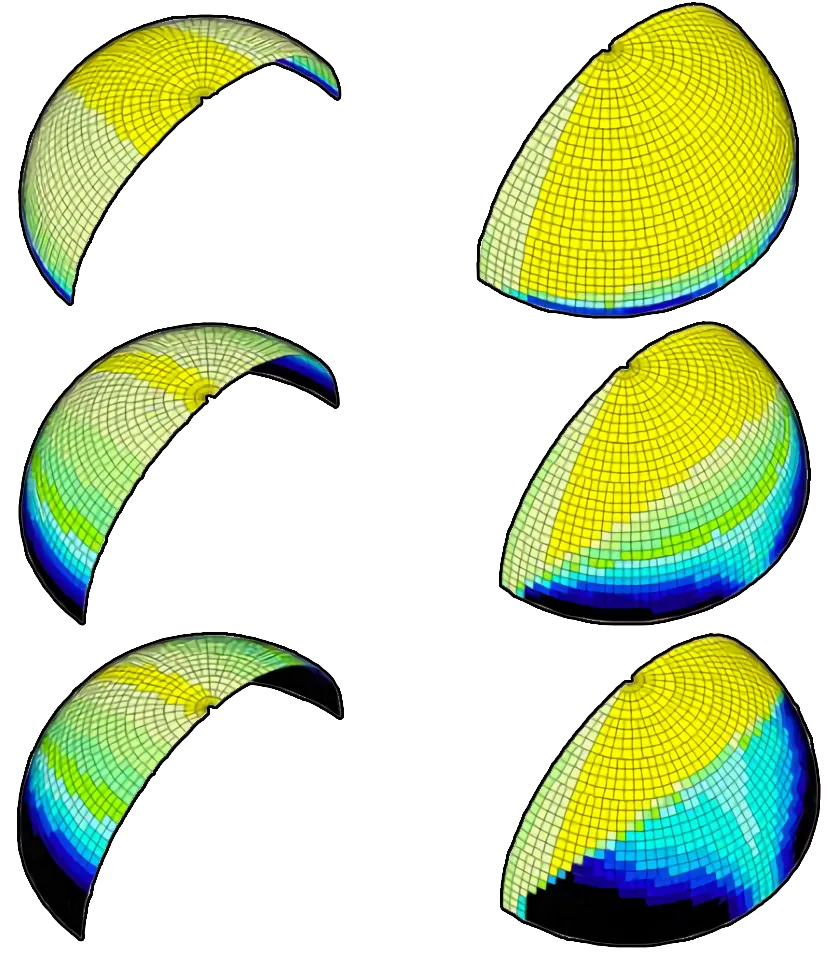
- Visualisation tools for CFD and UTCI results using Python with Pandas and Plotly.
- Testing the tool on multiple case studies.
ACHIEVEMENTS
- Developed and improved GH-Python modules for the TRNlizard plugin.
- Built a working understanding of urban canyon CFD coupled with a thermal model for outdoor comfort calculation.
- Strengthened data analysis and visualisation skills using Python, Excel, and Plotly.
- Scientific validation via a peer-reviewed publication at the IBPSA building simulation conference.
TEAM
I worked alongside my Transsolar mentors Marion Hiller and Christian Frenzel over the 15-month fellowship.
WORKFLOW
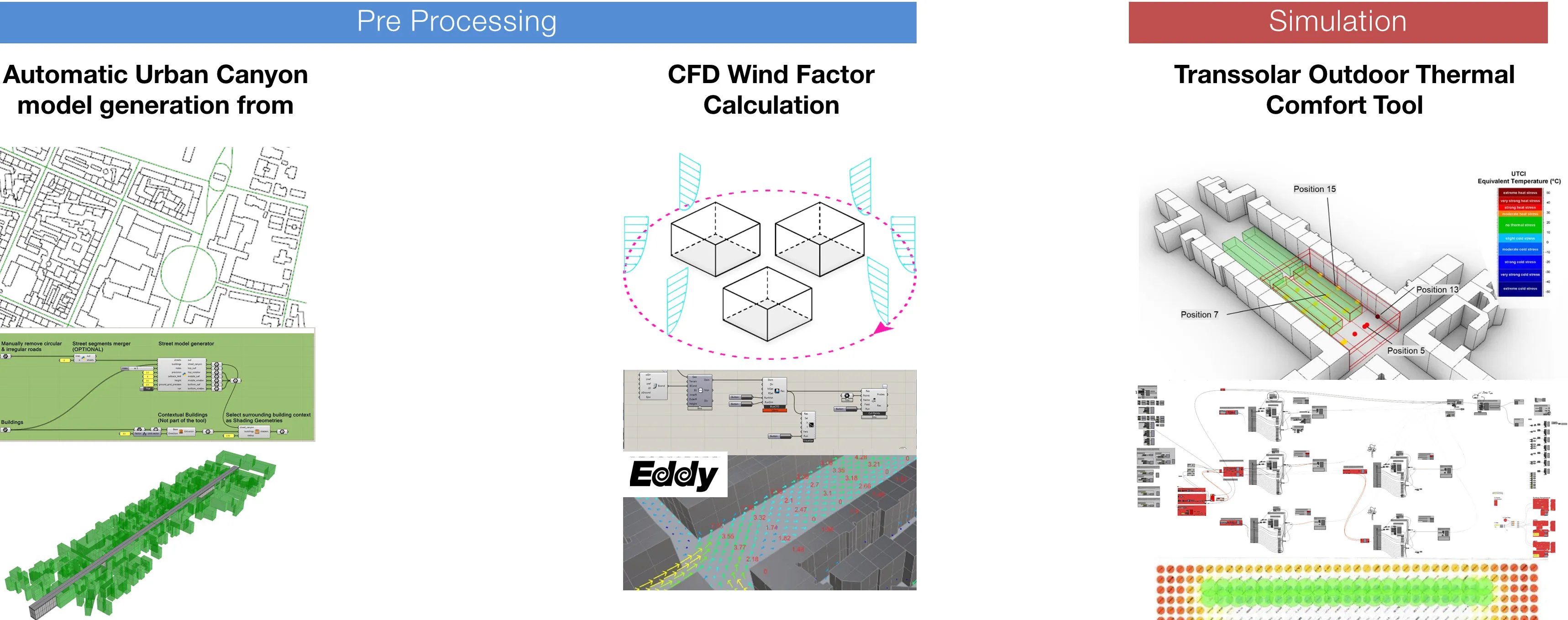
The workflow couples TRNSYS as the thermal engine with Grasshopper 3D via TRNlizard, integrating urban CFD results into the transient outdoor comfort model.
TOOL FEATURES
The tool integrates trees as thermally coupled zones, ingests wind comfort factors from CFD, and visualises CFD and UTCI results using Python with Pandas and Plotly.